TL;DR
- This guide covers everything you need to know about federal poverty level 2026.
- We break down eligibility rules, application steps, and common questions.
- At the bottom, you can take a free 5-minute screening to see which programs you qualify for.
What You Need to Know
What You Need to Know is one of those subjects where the details count. Here is what to focus on.
Benefits counselors at community organizations can review your full situation and identify programs you might not know about. Many United Way agencies, legal aid offices, and senior centers offer free benefits counseling. They know about local programs that do not appear in national databases.
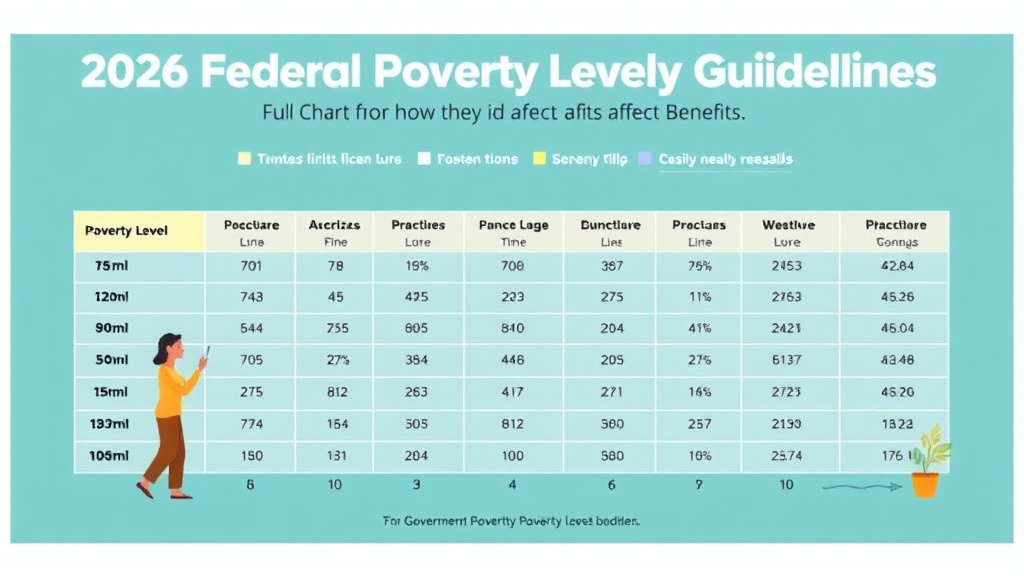
2026 Federal Poverty Level Guidelines is one of those topics that sounds complicated but is actually straightforward once you know the basics. This guide walks you through everything in plain language.
Expedited or emergency benefits are available for households in crisis. SNAP offers 7-day expedited processing if your monthly income is below $150 and liquid assets are below $100, or if your rent and utilities exceed your income plus assets. Ask about emergency processing when you apply.
The Basics
Government benefits fall into two broad categories: means-tested programs (which check your income and assets) and universal programs (which are available regardless of income). Most of the programs people think of, like SNAP, Medicaid, and Section 8, are means-tested. Social Security and Medicare are closer to universal, though income can still affect how much you receive.
Household composition rules vary by program. SNAP counts everyone who purchases and prepares food together. Medicaid uses tax filing groups. Housing programs use all people living in the unit. Understanding which household members count for each program can affect whether you qualify and how much you receive.
The federal government sets baseline rules for most programs, but states have significant flexibility to expand or restrict eligibility. This is why benefits vary so much depending on where you live. A family that qualifies for Medicaid in one state might not qualify in a neighboring state.
Incomplete applications are the most common reason for denial. Missing a signature, leaving a field blank, or not attaching required verification documents can all result in a denial even when you clearly qualify. Review every page before submitting.
Federal Poverty Level Guidelines 2026
Most benefit programs tie their income limits to the Federal Poverty Level (FPL). Here are the 2026 numbers:
Categorical eligibility can override standard income and asset limits. If your household receives SNAP, TANF, or SSI, you may automatically qualify for other programs without a separate income review. This is why applying for one program first can unlock several others.
| Household Size | 100% FPL | 138% FPL | 200% FPL | 250% FPL | 400% FPL |
|---|---|---|---|---|---|
| 1 | $15,650 | $21,597 | $31,300 | $39,125 | $62,600 |
| 2 | $21,150 | $29,186 | $42,300 | $52,875 | $84,600 |
| 3 | $26,650 | $36,777 | $53,300 | $66,625 | $106,600 |
| 4 | $32,150 | $44,367 | $64,300 | $80,375 | $128,600 |
| 5 | $37,650 | $51,956 | $75,300 | $94,125 | $150,600 |
| 6 | $43,150 | $59,546 | $86,300 | $107,875 | $172,600 |
| 7 | $48,650 | $67,137 | $97,300 | $121,625 | $194,600 |
| 8 | $54,150 | $74,727 | $108,300 | $135,375 | $216,600 |
Income limits for most benefit programs are based on the Federal Poverty Level, but the percentage varies by program. SNAP uses 130% of FPL for gross income and 100% for net income. Medicaid thresholds range from 100% to 400% of FPL depending on the state and coverage category. Always check the specific program's income standard for your state.
Different programs use different FPL thresholds. Medicaid expansion covers up to 138% FPL. CHIP covers children up to 200-300% FPL depending on your state. ACA premium subsidies extend up to 400% FPL or beyond.
How Eligibility Is Determined
Every benefit program looks at a combination of factors to determine if you qualify. The most common factors are:
- Income: Your gross and/or net income compared to program thresholds (usually based on FPL)
- Household size: More people in your household generally means higher income limits
- Assets: Some programs count bank accounts, vehicles, and property. Others do not.
- Age: Programs like Medicare (65+), SSI for children, and senior-specific programs have age requirements
- Disability status: SSI, SSDI, and many Medicaid programs require documented disability
- Citizenship/immigration status: Requirements vary widely by program
- State of residence: Each state has different rules and may offer additional programs
Why People Miss Benefits They Qualify For
An estimated $30 billion in government benefits goes unclaimed every year. The main reasons are:
- People do not know the programs exist
- They assume they will not qualify
- The application process seems too complicated
- They do not realize they can receive multiple benefits at once
- They had a bad experience in the past and gave up
The reality is that most low and moderate-income households qualify for at least 2-3 programs. Many qualify for 5 or more. The average family that completes a benefits screening discovers over $5,000 in annual benefits they were not receiving.
Can You Receive Multiple Benefits?
Yes. There is no rule against receiving multiple government benefits. In fact, many programs are designed to work together. A typical family might receive SNAP for food, Medicaid for healthcare, LIHEAP for energy bills, and the EITC at tax time. Receiving one benefit often makes you automatically or categorically eligible for others.
For example, if your household receives SNAP, your children automatically qualify for free school meals. If you receive SSI, you typically auto-qualify for Medicaid in most states. These connections between programs are one of the biggest reasons to screen for all benefits at once rather than one at a time.
How to Get Started
The fastest way to find out what you qualify for is to complete a comprehensive benefits screening. Rather than researching each program individually and checking income limits one by one, a screening tool checks your information against all programs simultaneously.
BenefitScreen offers free benefits tools: SNAP and Medicaid eligibility checkers, calculators, appeal and letter generators, and plain-English guides. Applying for these programs is always free, and only the administering agency can decide your eligibility. Start the free screener.
Common Myths About Government Benefits
Let us clear up some misconceptions:
- "I make too much money." Many programs extend to 200-400% of the poverty level. A family of four earning up to $128,600 may still qualify for ACA premium subsidies.
- "Benefits are only for people who do not work." Most benefit recipients work. The EITC specifically rewards employment. SNAP has millions of working recipients.
- "It will take months to get approved." SNAP and Medicaid often approve within days. Emergency SNAP can be approved in 7 days.
- "Receiving benefits will hurt my credit." Government benefits do not appear on credit reports and have no effect on your credit score.
- "I tried once and was denied, so I cannot apply again." You can reapply anytime your situation changes. Many people are approved on a second attempt.
Tips for a Successful Application
- Gather all your documents before you start
- Apply for multiple programs at once when possible
- Be thorough and accurate on applications. Do not leave fields blank.
- Respond to all requests for additional information promptly
- Keep copies of everything you submit
- Write down confirmation numbers and caseworker names
- Set calendar reminders for recertification deadlines
- Ask about expedited processing if you are in an emergency
Related Resources
- What Documents Do You Need to Apply for Government Benefits?
- How Benefits Differ by State: Why Location Matters
- How State Waivers Change Federal Benefit Rules
- Benefits for Aging Veterans: Aid and Attendance
- Family Self-Sufficiency Program Guide
Find Out What Benefits You Qualify For
Most people qualify for more benefits than they think. In fact, over $30 billion in government benefits goes unclaimed every year simply because people do not know they are eligible.
BenefitScreen offers free benefits tools: SNAP and Medicaid eligibility checkers, calculators, appeal and letter generators, and plain-English guides. Applying for these programs is always free, and only the administering agency can decide your eligibility. Start the free screener.
Take the free benefits screening now and find out what you are missing.
Action Steps
- Check whether your current benefits make you automatically eligible for additional programs.
- Set up a benefits folder with copies of every application and every notice you receive.
- Gather your identification, proof of income, and proof of residence so you are ready to apply.
- BenefitScreen offers free tools to see which benefit programs you may qualify for: eligibility screeners, calculators, and letter generators. Applying is always free. Start the free screener.
Try our free tools
Frequently Asked Questions
What should I know about the basics?
Government benefits fall into two broad categories: means-tested programs (which check your income and assets) and universal programs (which are available regardless of income). Most of the programs people think of, like SNAP, Medicaid, and Section 8, are means-tested. Social Security and Medicare are closer to universal, though income can still affect how much you receive.
What should I know about federal poverty level guidelines 2026?
Most benefit programs tie their income limits to the Federal Poverty Level (FPL). Here are the 2026 numbers:
How Eligibility Is Determined?
Every benefit program looks at a combination of factors to determine if you qualify. The most common factors are:
Why People Miss Benefits They Qualify For?
An estimated $30 billion in government benefits goes unclaimed every year. The main reasons are:
Can You Receive Multiple Benefits?
Yes. There is no rule against receiving multiple government benefits. In fact, many programs are designed to work together.